Amref at a Glance 2025 reflects a year shaped by significant shifts in global development financing placed unprecedented pressure on health and youth programs in Ethiopia. Yet even as resources tightened, the need for equitable, community-centered health and development solutions grew stronger.
Deliberate choices for enduring models
In response, Amref Health Africa made deliberate decisions to prioritize models that endure — community-owned institutions, digital platforms that improve access, quality, accountability, and approaches designed for integration into Ethiopia’s public health system. Our focus shifted from expansion to resilience, depth, and long-term value.
⚕️ grounded in evidence · partnership
“This shift is grounded in evidence. In partnership with the Ministry of Health and Regional Health Bureaus, we strengthened targeted evidence generation on costed, high-impact health systems interventions, ensuring continuity of essential services while reducing duplication and improving efficiency.”
Our SDG-3 Acceleration work, alongside our 15-year Amref supported Reproductive, Maternal, Neonatal, Children, Adolescent and Youth Health (RMNCAYH) impact analysis, exemplifies this commitment. We developed strategies for advancing program integration across routine immunization and health systems delivery supported by strong evidence driven approaches, as reflected in our immunization technical assistance.
At the same time, we are strengthening learning, evidence, and insight to guide decision-making. As an African-led institution, we are launching the Amref Impact Hub, a social enterprise combining practical training, digital health solutions, research, and consultancy — starting in Ethiopia and scaling in 2026, to sustainably strengthen people-centered primary health care and drive lasting health impact.
⚡ strategic priorities · 2025–2026
primary health care (shocks resilient)data & insightsresource mobilizationfinancial viabilityoperational excellence
reshaping how we deliver impact, more efficiently and with greater accountability.
Guided by clear strategic priorities — strengthened primary health care that can withstand shocks from climate stress to financial uncertainty, data and insights, resource mobilization, financial viability, and operational excellence — we are reshaping how we deliver impact, more efficiently and with greater accountability.
our unwavering commitment
Our commitment to the communities we serve remains unwavering. With the dedication of our staff and the continued partnership of government and donors, we move forward with resolve — inviting you to stand with us in advancing lasting, community-led health and development outcomes across Ethiopia.
#AmrefEthiopia
Our 2025 Highlights
A New Platform for Evidence and Insight: The Amref Insight Hub
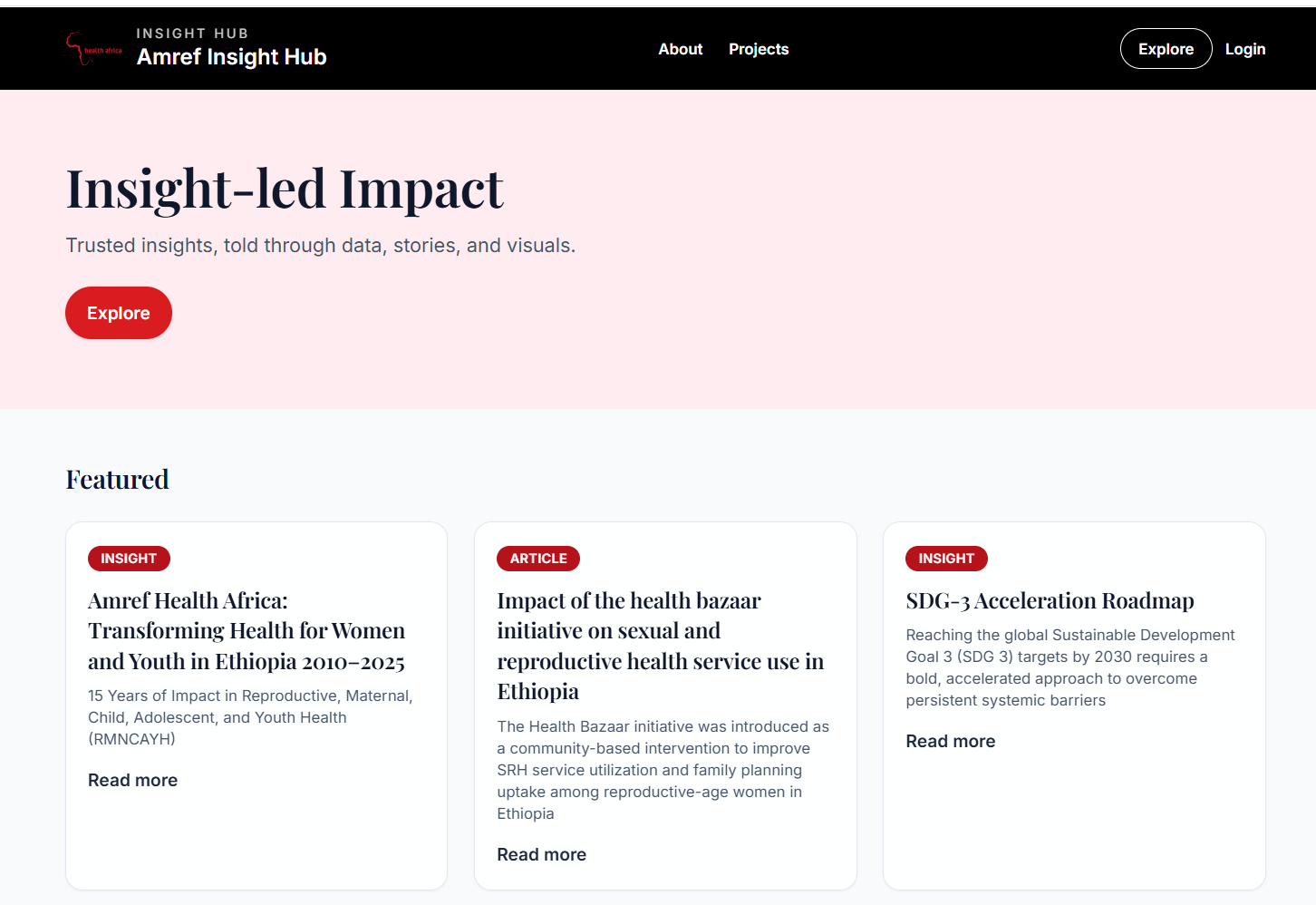
In 2025, Amref Health Africa launched the Amref Insight Hub (www.amrefinsighthub.org) as a public platform dedicated to strengthening learning, knowledge sharing, and evidence-informed decision-making across health and development. The Insight Hub brings together evaluations, analytical products, program insights, and impact evidence from Amref’s work, presented in accessible and policy-relevant formats to support governments, partners, practitioners, and funders.
The Hub is designed to support continuous learning and more effective use of evidence. By consolidating data and insights across thematic areas, including primary health care, SDG-3 acceleration, immunization, RMNCAYH-N, WASH, digital health, and youth development, it enables stakeholders to identify patterns, compare approaches, and understand what works across different contexts. This shared knowledge base supports better prioritization, adaptive planning, and more informed policy and investment choices.
Beginning in Ethiopia and potentially expanding in 2026, the Amref Insight Hub strengthens how evidence and learning are used to guide decisions and improve outcomes ensuring that knowledge generated through implementation continues to inform more resilient, people-centred health systems.
Strengthening Immunization Systems Through
Data and Local Leadership
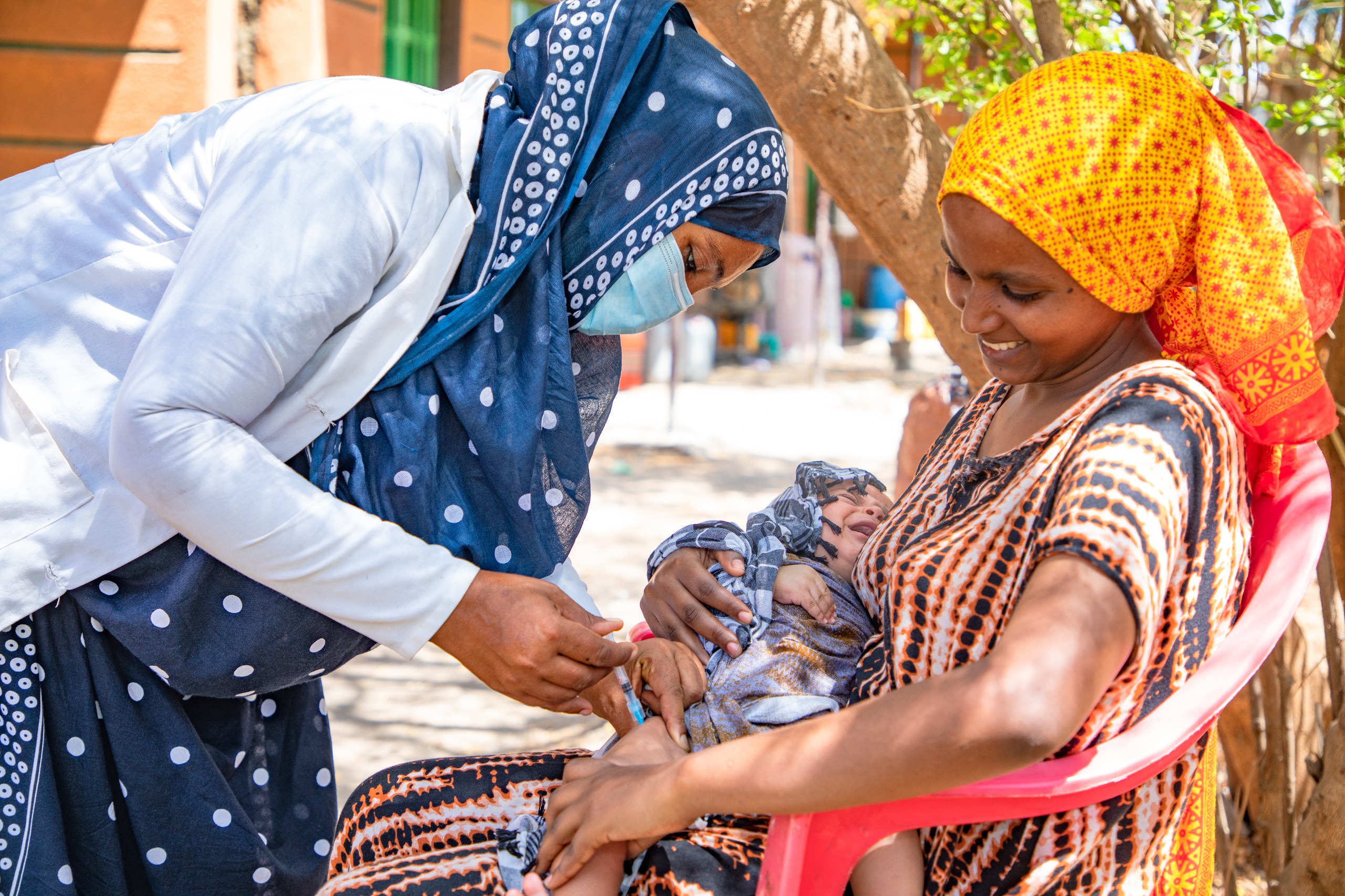
In 2025, Amref Health Africa, in strategic partnership with the Ministry of Health (MOH) and sub-national structures, spearheaded one of the nation's largest immunization programs across 57 districts in four regions. This initiative leveraged cutting-edge, house-to-house digital headcounts to generate precise proxy population projections, delivering real-time insights into zero-dose and under-immunized populations. By sharpening targeting and microplanning, we empowered data-driven, context-specific service delivery strategies tailored to regional nuances.
At the core was an integrated medical outreach model embracing a life-course approach, administering multiple antigens simultaneously to boost vaccination coverage efficiently. Amref's rigorous evidence-gathering illuminated multifaceted barriers to routine immunization and zero-dose challenges, fueling innovative solution ideation and the creation of comprehensive vaccination journey maps and linking the Dots in the vaccination value chain.
Complementing this, our impact evaluations, composite zero dose index analysis for woreda prioritization, cost analyses, and simulations informed a robust national scale-up model, ensuring sustainable expansion.
A landmark achievement was the establishment of the Immunization Impact Hub—a dynamic platform fostering collaboration, knowledge-sharing, and programmatic excellence. Amref also supported the development of Ethiopia's national immunization strategy, aligning efforts with global health priorities.
The results speak volumes: an 80% reduction in zero-dose cases from baseline and a 17% surge in full child immunization rates, significantly elevating routine immunization performance nationwide. These milestones not only underscore Amref's commitment to equity and innovation but also pave the way for amplified support in 2026 and beyond.
Armed with evidence-based approaches and scalable strategies, we stand ready to propel Ethiopia toward universal immunization, engaging governments and donors to invest in a healthier future where no child is left behind.
Resilience After the Global Funding Cut: What Held
One year after sweeping cuts in international development funding reshaped the sector, Amref Health Africa faced a defining stress test. Programs slowed or stopped, and the impact on communities—particularly young people—was immediate and real. Yet this period of contraction also revealed something essential: resilience is not improvised in crisis. It is built deliberately, long before disruption arrives.
In Ethiopia, Amref’s model, rooted in community ownership, localization, and youth-led economic participation, allowed the organization not only to absorb the shock but to adapt with purpose. While external resources diminished, locally anchored systems continued to function, partners adjusted rather than collapsed, and youth-centered economic platforms endured.
The scale of disruption was significant. Youth governance and agency programs affecting more than 74,000 young people were halted. Skills development and employment initiatives reaching over 25,000 youth were scaled down. Family planning and SRHR services across 88 outlets were shuttered. These losses matter—and naming them matters.
At the same time, the foundations that had been intentionally built held firm. Community- and youth-owned Savings and Credit Cooperative Organizations (SACCOs) continued operating, sustaining access to savings and credit for more than 13,500 young people. Over 1,500 youth transitioned from job seekers to job creators through locally rooted economic models. Trusted philanthropists and foundations did not hesitate to lend hand during such period. Civil society partners with strengthened technical and program delivery, governance, financial management, and accountability systems continued operating independently, secured and managed new resources even amid uncertainty.
Impact Story
From Standstill to Skills
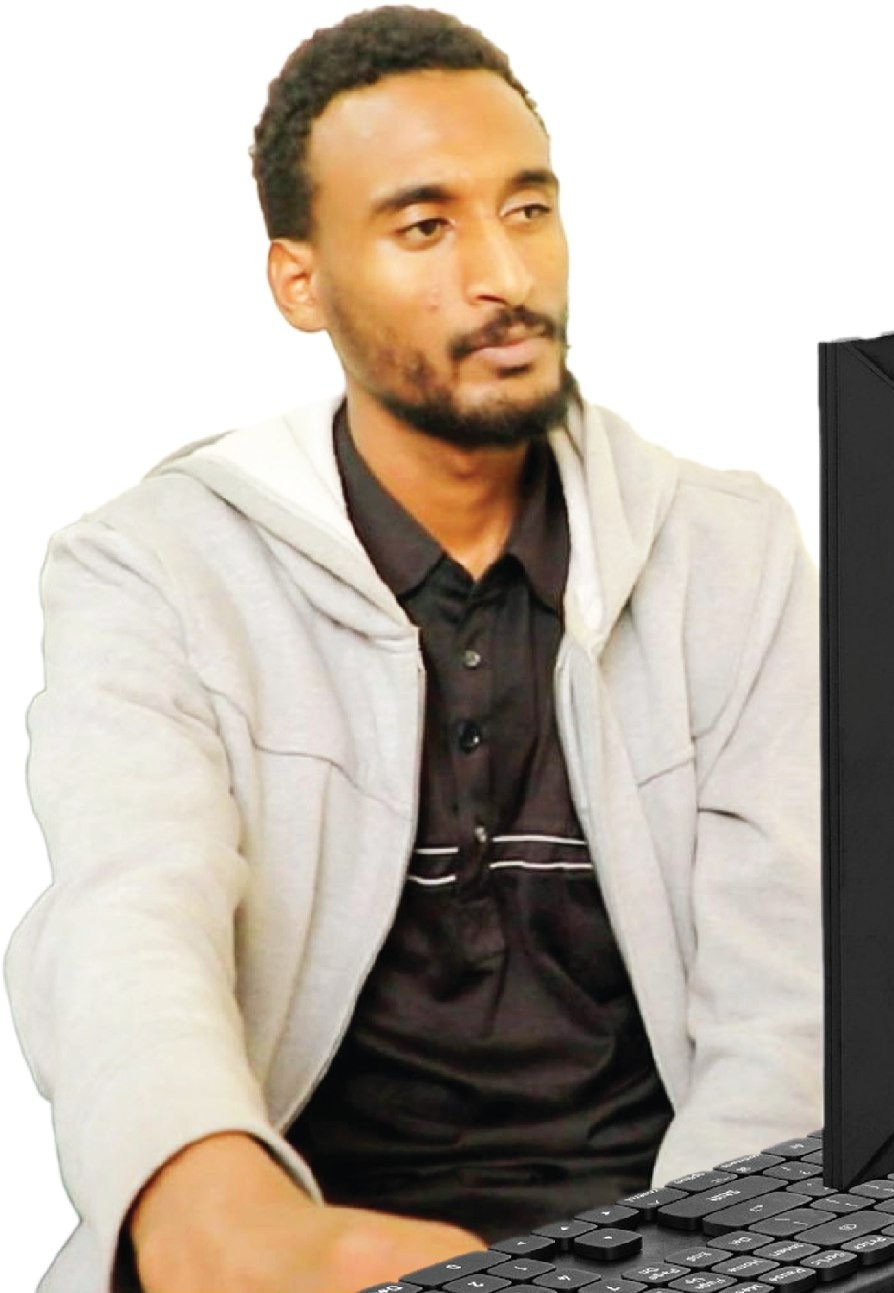
Yared Mesfin was at a standstill. After completing grade 12, he did not pass the national exam, and financial constraints kept him from pursuing further education.
That changed when he learned about the Amref and Vodafone Foundation supported Digital Youth Inclusion Initiative at the Nifas Silk Youth Center. Through the initiative, Yared gained free access to in-person training in graphic design and videography, alongside online certification courses. For him, this was more than training—it was an opening.
At a time when many youth programs were disrupted, Amref maintained access to learning platforms already embedded in communities. Youth centers remained operational, digital devices and connectivity were available, and blended learning pathways continued.
With access to tablets, internet, and structured learning, Yared moved from uncertainty to progress. He is now building marketable digital skills and working toward internationally recognized certification—positioning him for internships and employment.
These outcomes underscore a critical lesson from the past year: localization is not a handover strategy—it is an operating system. When programs are co-created with communities, when youth are treated as economic actors rather than beneficiaries, and when local institutions are trusted and capacitated to lead, resilience becomes structural.
As the sector reflects on what was lost, this moment also calls attention to what endured—and why. The experience affirms that investing in locally led, youth-centered systems is not only equitable, but essential for sustaining impact thru trusted partnerships in an increasingly uncertain world. As an African-led institution, Amref built such resilient models that sustain its mission while creating space for the next generation to lead and scale.
Demonstrating What Works: Evidence from Amref’s 15 Years of Impact in Ethiopia
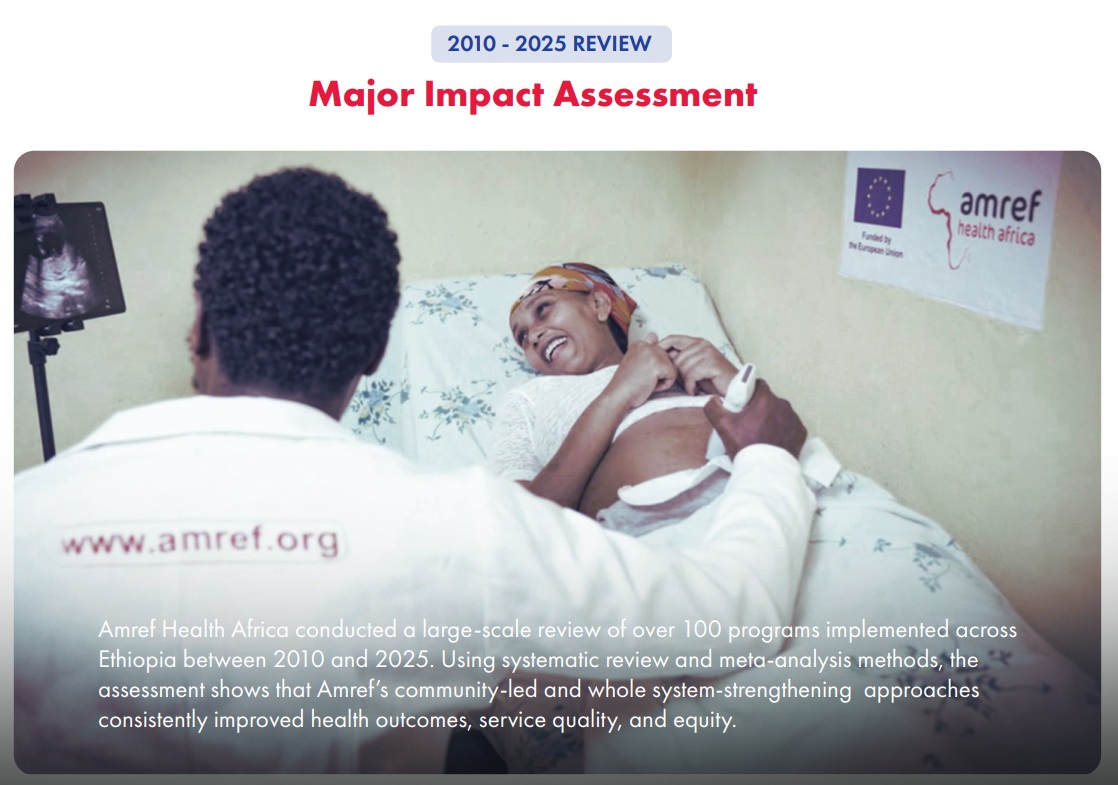
Amref Health Africa works in Ethiopia to improve health and well-being across the continuum of care—from pre-pregnancy through childhood. Until recently, the combined impact of its RMNCAYH programming had not been fully synthesized and pooled[1]. In 2025, Amref conducted a systematic review of RMNCAYH work implemented between 2010 and 2025, analyzing 36 projects across seven regions and two administrative cities. The aim was to understand what worked, what did not, and the key lessons to guide future programming.
Each project reviewed typically ran for about three years on average and was implemented in different locations at different times over the 15-year period. Across the portfolio, projects used a mix of approaches—technology, private-sector engagement, task shifting, innovative service delivery models, and strong community participation—to improve antenatal care, skilled birth attendance, postnatal care, family planning, immunization, and adolescent and youth health in Ethiopia.
The findings confirm that Amref’s long-term, system-strengthening approach has consistently improved health outcomes, service utilization, and equity across diverse contexts, including fragile and conflict-affected settings. Maternal and reproductive health indicators showed strong gains, with antenatal care, skilled birth attendance, postnatal care, and contraceptive prevalence increasing significantly across intervention areas. Social norm change interventions contributed to substantial declines in early marriage and Female Genital Mutilation/Cutting, while youth, Human Resources for Health, and primary healthcare investments strengthened workforce capacity, service quality, and community–facility linkages.
Beyond headline results, the assessment points to a critical lesson for health systems operating under pressure. Community engagement demonstrated stronger resilience during periods of crisis, offering important policy lessons for health system design. This underscores the value of investing in people-centred, community-embedded approaches that strengthen system adaptability, protect essential services, and deliver sustained returns even under financial and operational stress.
The evidence also reinforces that impact is strongest where interventions are integrated, locally led, and aligned with national priorities. Amref’s partnership with the MoH and Regional Health Bureaus, combined with sustained investment in workforce development, community ownership, and data-informed decision-making, enabled results to be maintained beyond individual project cycles.
This body of evidence reflects Amref’s deliberate shift toward resilience, depth, and long-term value. As an African-led institution, Amref is drawing this evidence to shape future programming - strengthening how evidence and learning inform decisions—using data not only to demonstrate results, but to adapt, prioritize, and scale what works.
Antenatal care increased from 68.8% to 75.8%.
Skilled birth attendance from 45.9% to 69.1%.
Postnatal care from 23.1% to 75.4%.
Contraceptive prevalence rose from 44.5% to 59.2%, while satisfaction with family planning services increased from 44.7% to 89.6%.
Immunization coverage increased from 24% at baseline to 47% at end line.
Early marriage declined from 48% to 18% in intervention areas, and FGM/C prevalence dropped by more than half in multiple regions.
Advancing SDG-3 Through Data-Driven Pathways
In 2025, Amref Health Africa deepened its partnership with the MoH to support the development of Ethiopia’s SDG-3 Acceleration Roadmap, positioning evidence and modeling at the centre of national decision-making on maternal and child health. The plan provides a practical, data-driven pathway for closing persistent gaps in health outcomes while strengthening the resilience and equity of Ethiopia’s health system on the road to 2030.
Working alongside the Ministry and Regional Health Bureaus, Amref developed scenario-based SDG-3 modeling to identify where focused investments would deliver the greatest impact under real system conditions. The analysis translated national data into actionable policy choices, helping decision-makers prioritize interventions that are both high-impact and feasible within existing Primary Health Care platforms.
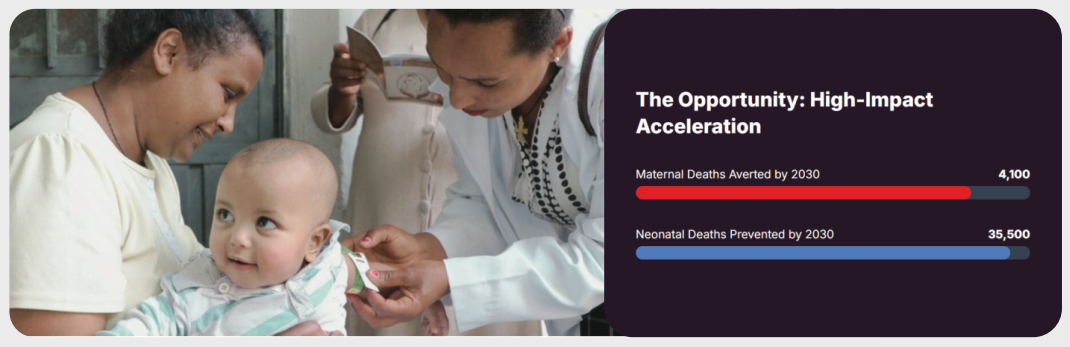
The modeling indicates that expanding effective coverage and ensuring women receive timely, high-quality care across maternal health services could help avert an estimated 4,000 maternal deaths in the year 2030, alone. Crucially, these gains depend not only on service availability, but on system enablers such as health worker capacity, functional referral networks, reliable supplies, and service readiness. This reinforces the importance of strengthening systems alongside scaling services.
The analysis further shows that most lives could be saved by concentrating on a small set of proven interventions across the continuum of care, including quality labor and delivery services, prevention and management of pre-eclampsia and postpartum hemorrhage, safe abortion and post-abortion care, timely Caesarean delivery, clean birth environments, access to modern contraception, and effective management of maternal infections. Focusing on these interventions offers a clear pathway to maximize impact, efficiency, and value for money.
Beyond maternal health, the SDG-3 Acceleration Roadmap demonstrates the role of data-driven pathways in aligning partners around shared priorities. For Amref, this work reflects a broader strategic role, supporting national leadership with credible evidence, analytical capacity, and practical tools that translate data into decisions.
As Ethiopia accelerates progress toward SDG-3, Amref remains committed to working alongside the Ministry of Health to build resilient, people-centred health systems grounded in data, equity, and national ownership.